


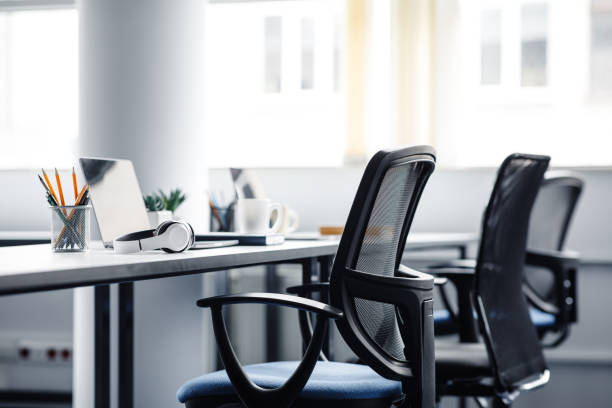
Your chair and desk height set the tone for the whole workday. Use this guide to measure in a logical order and avoid common mismatches.
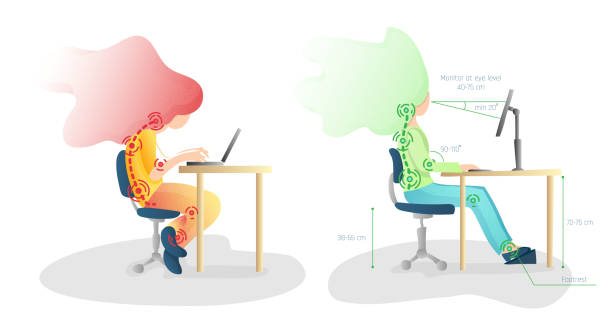
Stand next to the chair and raise or lower the seat until the highest point of the cushion sits roughly 2–3 cm below your kneecap. When you sit, your thighs should be parallel to the floor or angled slightly downward toward the knees. Pressure on the back of the thighs means the seat is too high or too deep without support.
If your feet do not rest flat, use a footrest rather than lowering the chair so much that your arms must reach upward to type. Dutch employers sometimes provide footrests after a workplace survey; at home, a stable box with a non-slip surface can work temporarily—ensure it does not slide on laminate or rug.
Seat depth is the distance from the front edge to the backrest. Sit fully back: you should fit two to three fingers between the front of the seat and the back of your calf. Too deep, and you slide forward to relieve pressure, losing back support. Too shallow, and thighs lack support.
Lumbar support should fill the inward curve of the lower back, not push the whole spine forward. Many chairs offer height-adjustable lumbar pads—align the bulge with your belt line. If the chair has a mesh back, tighten tension until you feel gentle contact without being pushed off the seat pan.
With shoulders down and elbows near 90 degrees, the keyboard should sit so wrists stay straight—not bent up or down. A negative tilt keyboard tray can help if the desk is fixed high. Place the mouse beside the keyboard at the same level; reaching sideways all day loads the shoulder.
Keep the “primary zone” within a forearm’s reach: keyboard, mouse, notepad, and one drink. Push printers, archives, and spare monitors to a secondary zone so you stand to fetch them—a built-in movement cue. Cable management is safety as well as aesthetics: route cords so they do not snag feet or chair casters.
Try a small firm cushion at belt height, or a rolled towel tested for 20 minutes. If discomfort persists, consider a chair with adjustable lumbar or an employer assessment. Avoid oversized pillows that push you forward off the seat.
Kneeling chairs change load through knees and shins; some people like them for short tasks. They are rarely a full-day solution for everyone. Alternate with a conventional chair if you experiment.
Memorise three numbers: seat height setting, screen height fix (stand or books), and footrest yes/no. Spend 90 seconds adjusting before opening email—cheaper than hours of subtle strain.
After chair and desk fit, align your screens on Monitor Setup and plan breaks on Movement & Recovery. Run the full checklist on Workspace Assessment.
Self-assessment12 Jun 2026 — Desk & chair measurements lab (Amsterdam). Request a spot.